🇯🇵 日本語版は記事の下部にあります / Japanese version available below

Akishika Brewery in Nose, Osaka is a grain-to-bottle producer known for dry, flavor-forward junmai (pure-rice sake) and genshu (undiluted) bottlings. One of roughly 50 breweries in Japan that grow their own rice (out of 1,141 producers), Akishika focuses on field character, a koji method designed to fully dissolve the grain, and traditional starters like kimoto and yamahai, particularly for their own rice.
I’m a big fan of Akishika. Their sake doesn’t chase showy aromas. It speaks through umami, a gentle bitterness, texture, a long finish, and balanced acidity. It’s unmistakably sake, yet has a power wine lovers will recognize—and that's what I love about it.
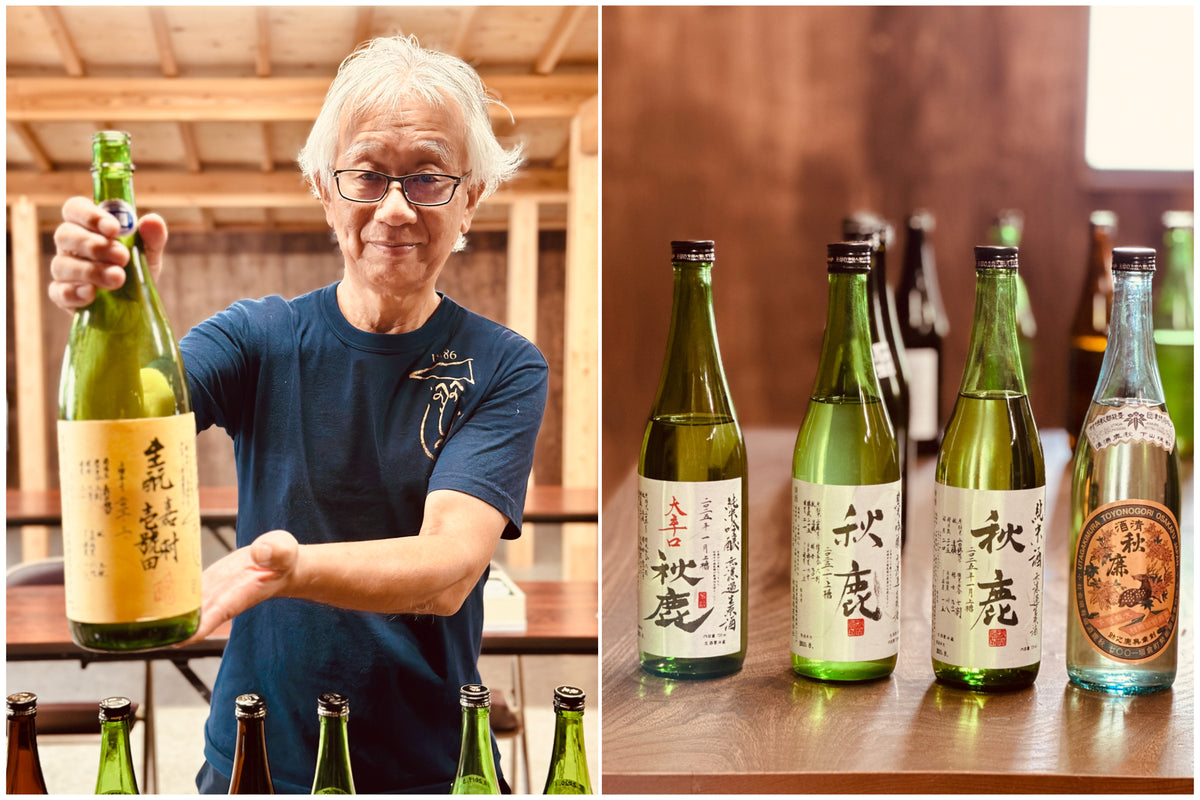
This article is my on-site interview with brewmaster Hiroaki Oku at the brewery.
Reference: Japan’s National Tax Agency reports 1,141 breweries that produced sake in FY2022.
I’m Kazumi, a DipWSET and educator based in Amsterdam. With a background in wine and sake, I translate sake through a wine-savvy lens.
📍Who this article is for
Sake drinkers (beginner to advanced) who want to understand style differences
Natural-wine lovers and anyone curious about domaine-style production (estate-grown, estate-made)
People interested in how ageing works in sake
Grain to bottle: starting with rice
The tour began with a huge rice mill that has run for more than 35 years. It handles 1,200 kg at a time: milling to 80% takes about 6 hours; to 40% takes a full three days. “We grow the rice and we mill it ourselves”—and Akishika return all the rice bran to the fields as fertilizer.
How most breweries work: many buy rice through agricultural co-ops (JA) and choose by official rice grading, mainly grain size and appearance. Larger, plumper grains score higher, so some farms add extra nitrogen to push that “plumpness.”
As a brewery that grows its own rice, Akishika takes a different path.
Akishika don’t chase high grades. "Third grade—the regulatory minimum for stating rice variety on the label—is actually ideal, Mr. Oku says." Smaller, not-too-plump grains give more concentrated flavor, Mr.Oku says. As for shinpaku (the white opaque core in sake rice that helps water absorption and dissolving), large shinpaku can crack easily at high polishing; smaller—or none—is easier to handle.
Fertilizer is only rice bran. No chemical fertilizer, no pesticides. It’s a closed loop on their farm. The grains end up smaller, but the flavor stays true to the rice.
Akishika manage fields by parcel. Soil differences matter, and parcels are treated as separate “sites.” (To me, this feels very close to vineyard-and-soil thinking in wine.)
A concrete example is a single-field bottling from the Kamimura-Ōmachi paddy made with Omachi rice. The goal is to bottle the field’s character. Akishika plans to grow these single-field releases from the current one or two into a fuller range.
At Akishika, rice sourcing takes a two-pronged approach. They both cultivate rice in their own fields and purchase rice from contracted farmers. Bottles made with rice grown in their own paddies are marked with the playful symbol.

Notes: kimoto = older, hand-worked starter method; muroka = unfiltered; nama = unpasteurized; genshu = undiluted.
Brewing philosophy: make the rice dissolve
Akishika’s core belief is simple: believe in the rice. Akishika aim to dissolve the rice thoroughly and avoid throwing flavor away as sake cake (pressed lees). You can filter more to make a “refined, cleaner, and sophisticated” sake, but you also risk losing parts that would have built body and depth. So Akishika prioritize dissolving.
Fermentation runs a bit warmer than usual, and the target alcohol is around 17%. Akishika aim for a dry profile with very little residual sugar. When the rice dissolves well, total acidity tends to be slightly higher—this becomes the structure for ageing. Most releases rest 1–2 years before shipping so the sake reaches you at a drink-now peak.
Mr. Oku: “We put a lot of work into growing the rice. Beyond that, we keep the process simple. Our focus is making sure the rice really dissolves—we try not to add extra ‘hands’ to the process.”
Koji: where flavor starts
This was the biggest surprise. There’s an old saying: “First koji, second starter, third everything else.” Koji (rice inoculated with a mold to convert starch into sugar) is what lets sake ferment at all. Grapes already have sugar, while rice needs koji to create fermentable sugar. How completely the koji breaks down the rice sets the core and weight of flavor.
In simple terms, you can design koji in two directions:
Less dissolving for a sleeker, cleaner style
More dissolving for a broader, deeper style (with less lees discarded)
Akishika chooses the second. Even for polished, elegant styles like daiginjo, Akishika stay close to the “dissolve” idea.
Their method is unusual. Instead of sprinkling koji spores in a dedicated koji room (the classic ritual-like scene with white powder floating in the air that you see in photos) and mixing to even it out, they spread the spores where air flows in one direction—inside a drying/humidity-control unit. Each grain gets coated evenly and the koji grows strong and healthy. The aim is single-minded: dissolve the rice well.
Ageing and how the world sees it
Akishika ships at “drinkable maturity.” They build dry, rice-driven sakes with structure, then let time do its work. In Japan, sake is generally expected to be enjoyed young and fresh. It is usually consumed before it has any chance to undergo aging, and the market for matured sake is still relatively small. However, Akishika brews with ageing in mind.
Mr. Oku: “We usually wait one to two years before release. Not many breweries hold that long, but the outline becomes clearer, and we can hand over a sake that’s ready. In Europe, where wine ageing is normal, people understand this quickly.”
Their commitment to maintaining their style, even as a minority, is also reflected in their attitude toward competitions. They choose not to submit their sake to national appraisals or contests.
Mr. Oku: “We make sake for drinkers, not judges. In Japan lately, more aromatic and slightly sweet styles do well in contests. We keep making dry sake.”
The result? It works. Sales are healthy, and exports are steadily growing.
Personal note: In the Netherlands I tasted a 2002 vintage Akishika koshu (aged sake). It was truly superb—complex and deep—and still lively after twenty years.

A big tasting at the brewery

I tasted 28 sakes in total: 19 current releases and 9 newer-vintages that are waiting for the release(The current vintage for a aged sake is 2020 and the vertical tastings across 2021–2025 for comparison.). A house signature ran through everything: not flashy aromatics, but flavor that rises in the mouth, complex “after-aromas,” and a precise, long, dry finish.
Tasted 28, Had to Narrow It Down
Yamada Nishiki Junmai Daiginjo “Ikkantsukuri” 2024
A daiginjo that speaks through flavor, not perfume. Gentle rice sweetness and umami flow gracefully, and the long layered finish stays dry—“flavor-forward daiginjo.”
Tech: Estate Yamada Nishiki 100% / polishing 40% / sokujo (quick starter with added lactic acid) / Kyokai #9 (in-house propagation) / Alc 16% / SMV +8 / Acidity 1.8 (SMV = Sake Meter Value; higher/positive = drier)Yamahai Yamada Nishiki Genshu 2025
Young and vivid: herbal freshness on the nose; in the mouth, rice-driven notes of nuts and spice linger as a flavor “aftertaste.” It shows Yamada Nishiki’s tidy, straight posture, with clear room to gain layers as it ages.
Tech: Yamada Nishiki / polishing 60% / yamahai (traditional starter using natural lactic acid bacteria) / Kyokai #7 / Alc 17% / SMV +12 / Acidity 2.2 / Amino Acid 1.6Kimoto Kamimura Ōmachi Omachi Muroka Namagenshu 2020
Five years on and still strikingly fresh and lively. The backbone of Omachi remains, edges have rounded, and the whole feels integrated. Deep layers, long quiet finish.
Tech: Omachi / polishing 60% / kimoto / Kyokai #7 / Alc 18% / SMV +9 / Acidity 2.7 / Amino Acid 1.7
What a single field can teach you: Kamimura-Ōmachi vertical
In general, young sake shows fresh herbs, green apple, melon, and gentle rice sweetness. With age you see hay and dried herbs, nuts, bran, mushroom; textures soften and gain depth.
We lined up Kamimura-Ōmachi (single paddy) × Omachi across 2020 (current release) and 2021–2025 (newer vintages). The pace and face of ageing shifted year by year:
2020 (current): as described above in #3.
2021: surprisingly, clear maturity—drier herbs, light nuttiness, and a softer, rounder outline without losing structure.
2022: sits between 2020 and 2021; a poised balance of freshness and early maturity.
2023・2024・2025: all still young; fresh-herb tones remain; tight flavors with obvious room to build layers in bottle.
Mr. Oku also pointed to a farming link: when ripening-season temperatures run higher, the rice’s outer layer firms up slightly and amino-acid levels tend to rise—those years often show maturity earlier in the glass. We could see that tendency across these consecutive vintages. The takeaway: “older equals more mature” is too simple—vintage shapes the ageing curve.
On top of that, soils differ by area, too. Kanda has dark, volcanic-ash-like earth; Ōmachi is more clay-rich. Even with the same rice variety, the field shifts the sake’s personality. Akishika plans to expand the single-field program from the current one or two bottlings.
Outlaw fun: moto-shibori
Mr.Oku poured me something I’d never tasted: moto-shibori. Sake starts with a concentrated yeast-starter mash (shubo) to kick off a healthy main fermentation. Moto-shibori presses that starter as a mid-process sake. The idea came from tasting the starter and thinking, “What if we press this?” Mr.Oku tried it, liked it, and still make small batches.
Moto-shibori sits around 9% alcohol. It’s sweet-tart with a light, silky feel. Berry-like notes rise in the mouth; the finish suggests ripe persimmon and faint caramel, kept clean by refreshing acidity. It shines as a dessert-course alternative; a Michelin-starred sushi restaurant in Tokyo has paired it with a “ripe persimmon × fresh cheese” mille-feuille.
Final thought
Akishika is built on the full chain: grow the rice, then make the sake. Akishika aim at drinkers, not judges, and keep testing their own ideas—saving back vintages, tasting verticals, and feeding what Mr.Oku learns back into brewing. Mr.Oku also enjoys trying new shapes, from moto-shibori to single-field bottlings. Sake’s value isn’t only about how much you polish. Field character, farming choices, dissolving design, ageing frame—the sum of these is what you taste in the glass.
This is why I can’t stop watching Akishika. I’m a fan, and I expect their flavor-first sake to keep evolving.
My thanks to Hiroaki Oku for the generous interview, and to Dick at Yoigokochi (Netherlands importer) for making the visit possible. In the Netherlands, you can find Akishika at restaurants and shops through Yoigokochi.
Stay in the loop
New arrivals, workshop dates, and sake worth knowing about — straight to your inbox.
米の力を信じる酒造り ─ 秋鹿酒造インタビュー

秋鹿(あきしか)の大ファンである。香りで華やかさを競う酒ではなく、旨味とほろ苦み、テクスチャー、余韻、そして酸のバランスで語る酒。日本酒でありながら、どこかワインを思わせる力強さがある——そんな秋鹿の酒が心から好きだ。
オランダ在住のワインと日本酒の講師をする私は、残暑の残る8月、たまたま帰国の機会を得て、高揚のまま真っ先に秋鹿酒造へ向かった。
秋鹿酒造(あきしかしゅぞう)は大阪府北部・能勢町にある酒蔵である。蔵を切り盛りするのは奥裕明さん。スタイルは一貫して辛口。ラインナップは純米酒が中心で、生原酒(げんしゅ)も多いのが持ち味だ。強調しておきたいのは、全国に千余(*1)の清酒製造場がある中で、米作りから取り組む蔵はおよそ50蔵に過ぎず、秋鹿はその稀少な一蔵である点である。この記事は、実際に蔵を訪ねて杜氏の奥裕明さんにインタビューした内容をまとめたものである。
(*1)令和4酒造年度に実際に清酒を製造した場数は1,141場(国税庁)。出典:清酒の製造状況等について(令和4酒造年度)PDF
米作りから始まる一貫生産
最初に案内されたのは、35年以上使っているという大型の精米機である。一度に1200kgを仕込め、精米歩合80%なら約6時間、40%まで磨けば丸3日。育てた米は自分たちの手で磨く——その当たり前を、秋鹿は今も続けている。削り落とした外側(米糠)はすべて、肥料として田へ戻す。
まず、国内で一般的に見られる姿を押さえたい。多くの蔵はJA(農協)経由で米を購入し、米の等級(粒張りや外観)をもとに原料の米を選ぶ。上位等級は大粒で“プリプリ”した米が有利になりやすく、粒張りを狙って窒素をやや多めに与える田も少なくないという。
秋鹿では二段構えの米作りをしている。自社で米作りからすべて行っている田んぼと、契約農家から仕入れる米の両方を使う。自分たちの田んぼで収穫した米を使った酒には、「へのへのもへじ」のマークが記されている。

米作りから行う秋鹿は、その常識といくつかの点で発想が異なる。
第一に、等級を追わない。小粒で過度に“プリプリ”していない米の方が味わいが凝縮すると考える。また、心白(*2)は「大きいほど割れやすい」ため、小さい方が良いそうだ。規制上米の品種を記載できる下限「三等級」が理想という。
第二に、肥料は米糠のみ。米糠には必要な栄養素が含まれているが、微量であるため、自然由来の栄養のみの小粒の米になる。化学肥料や農薬に頼らない結果として米本来の味わいが生きる。
第三に、自家栽培の米を田んぼ単位で見る。土壌の違いを意識し、区画ごとに別物として管理する。これはワインでいう“土壌・区画”の感覚に通じると強く感じた。
(※2):心白(しんぱく)……酒造好適米の中心に現れる白い不透明部。吸水・溶解を助けるが、大きすぎると割れやすく、高精米では不利に働くことがある。
醸造の哲学 ─ 造りの核は「米を溶かす力」
秋鹿の酒造りは、「米の力を信じる」に尽きる。米をしっかり溶かし、酒粕をできるだけ出さない設計だ。酒粕を多く取り除けば酒は澄むが、本来なら酒に溶け込んで味や厚みになる部分まで手放しがちになる。だから“溶かす力”を重視するのである。
発酵から熟成までの考え方もその延長にある。発酵はやや高めの温度帯で管理し、アルコールは17度前後を目安に、残糖を残さず辛口に仕上げる。米をよく溶かすほど酸も(やや)高めになり、その酸が熟成の骨格になる。秋鹿では1〜2年熟成させてから出荷するのが基本で、その時間に耐えうる輪郭をあらかじめ与えている。
秋鹿酒造 奥さん:「うちは、米作りには手間暇をかけています。でも、米がしっかり溶けるようにする/溶かし切るという方向以外、造りはできるだけシンプルに、余計な手はかけません。」
麴(こうじ)づくりのこだわり
最も驚いたのは、麴づくりである。酒造りには「一麴、二酛、三造り」という言い回しがあるとおり、まず麴がいちばん大事だ。麴は米の糖化を担う。ワインは果実自体に糖があるのでそのまま発酵するが、米には糖がない。麴が米のデンプンを糖へ変えることで、はじめて発酵が進む。どれだけ米を“溶かして”糖を生むかが、味の芯や厚みを決める。
麴の設計には大きく二つの方向がある。ひとつは溶かしを控えてすっきり洗練させる方向、もうひとつはよく溶かして味を太くする方向。前者は酒粕が多く出やすい。秋鹿はもちろん後者——米をしっかり溶かす麴を選ぶ。大吟醸のように洗練に寄せる酒でも、基本思想は後者に近いという。
方法も独特だ。多くの蔵が専用の部屋で麴菌の粉を米にふりかける(白い粉が宙に舞う、あの“儀式”のような)作業を行うのに対し、秋鹿は風が一方向に流れる乾燥・調湿機内で行う。粒ごとに均一に麴をまとわせ、健全で力のある麴を育てるためである。
熟成の考え方と評価
日本では日本酒は、若くフレッシュなうちに飲むのが一般的とされている。熟成させる前に消費されるのが普通であり、熟成酒の市場はまだそれほど大きくない。しかし、秋鹿は、「飲み頃で届ける」発想で熟成を重視する。米をしっかり溶かして辛口に仕上げ、そのうえで時間に耐える骨格を育てるという造りの帰結である。
秋鹿酒造 奥さん:「基本は1〜2年寝かせてから出します。ここまで待つ蔵は多くありませんが、そのほうが味の輪郭がはっきりして、飲み頃でお渡しできます。ヨーロッパはワイン文化があるので熟成の考え方が伝わりやすく、評価も早いですね。」
少数派でもスタイルを貫く姿勢は、コンペへの向き合い方にも表れる。鑑評会やコンクールには出さない。
秋鹿酒造 奥さん:「審査員に評価されるためではなく、飲む人に届けたいんです。近年の日本では、香りが立ってやや甘口に感じられるタイプが評価されやすい流れもありますが、うちは辛口を貫きます。」
結果は良好で、売上にも表れている。そして輸出も着実に伸びている。
付記:オランダのインポーター酔い心地を通じて、2002年ヴィンテージの秋鹿・古酒を飲む機会に恵まれたが、その複雑さと深みは本当に素晴らしかった。そして何より、20年を経てもなお生き生きとしていたことに驚かされた。
圧巻のテイスティング

この日テイスティングしたのは、商品化済み19本に加え、商品化前のバックヴィンテージ9本について 2021/2022/2023/2024/2025 の連続ヴィンテージを縦比較(バーティカル)で味わった。合計28本、どの酒も、香りで派手さを競わず“味”で魅せ、口中で穏やかに立ち上がる香りの残像が複雑で、辛口の余韻が正確に長く続くのが印象的だ。
敢えて選ぶ、印象に残った3本
-
山田錦 純米大吟醸 一貫造り 2024
大吟醸でありながら、香り一辺倒ではなく“味”に重心がある。米由来の優しい甘さと旨味がエレガントに流れ、長く層をなすフィニッシュはあくまで辛口。「味で語る大吟醸」を体現する一本。
[Tech] 自営田産山田錦100%/精米歩合40%/速醸(そくじょう)/協会9号(自家培養)/ALC16%/日本酒度+8/酸度1.8
-
山廃 山田錦原酒 2025
若いヴィンテージならではのハーブのような爽やかさがあり、口に含むとナッツやスパイスを含む米の風味が“味わいの残像”として長く残る。優等生な山田錦らしいすっきりしている一方で、今後の熟成でレイヤーが厚みを増していく余地は大きい。
[Tech] 雄町/精米歩合60%/山廃/協会7号/ALC17%/日本酒度+12/酸度2.2/アミノ酸度1.6
-
生酛 上村大町 雄町 無濾過生原酒 2020
5年を経ても驚くほどフレッシュでエレガント。雄町らしい骨格を保ちながら角がとれ、まとまりが前面に出る。レイヤーの厚みは群を抜き、余韻は静かに、長く続く。
[Tech] 雄町/精米歩合60%/生酛/協会7号/ALC18%/日本酒度+9/酸度2.7/アミノ酸度1.7
単一田んぼ「上村大町」の雄町米の垂直試飲
一般論として、若い段階にはフレッシュハーブ、青リンゴ、メロン、米由来の甘いニュアンスが前面に出やすく、熟成が進むとヘイ(乾草)やドライハーブ、ナッツ、ブラン(穀皮)、マッシュルームなどが現れ、丸みと深みへ移ろう。今回は、上村大町(単一田)×雄町を2020(現行)と2021〜2025(バックヴィンテージ)を並べ、年ごとに熟成のスピードと表れ方が異なることを確認した。
2020(現行ヴィンテージ):印象は前章3)に記したとおり。
2021:熟成感が明瞭。乾いたハーブや軽いナッツが印象的で、旨味の輪郭がやわらかく丸みを帯びる。骨格は保ちつつ、テクスチャーに落ち着きが出た年。
2022:熟成感でいうと2020と2021の間の印象。フレッシュさと熟成ニュアンスが拮抗し、過渡期ならではの均衡がある。
2023・2024・2025:いずれも若い印象で、フレッシュハーブの要素が残る。香味はタイトで、これからの熟成でレイヤーが厚みを増していく余地が大きい。
奥さんの観察では、登熟期(稲の実る時期)の気温が高い年は、熟成感が早く顔を出す傾向があるという。米の外層がやや硬くなり、アミノ酸度が上がりやすいためと推測している。同一田・連続年の並びでも、この傾向は確かにうかがえた。
「古いほど熟成感が出て、新しいほどフレッシュ」という単純な図式では語れない。ヴィンテージごとに熟成の歩み方が明確に異なることが浮き彫りになった。
田んぼは地域によって土質が違う。たとえば「神田(かみだ)」地区は黒土で火山灰に近い性質。一方で「大町(おおまち)」は粘土質。同じ品種を植えても、土壌で微妙に性格が変わると言う。田の個性をそのまま酒に写す単一田んぼ(シングル・ファーム)の日本酒を現状の1〜2銘柄から徐々に拡充していく意向だ。
アウトロー:型破りの楽しさ「酛搾り」
最後にとてもユニークな日本酒「酛搾り」を試飲した。日本酒づくりでは、主発酵に使う発酵の“もと”(酒母/しゅぼ)を先に仕込む。酛搾りは、その酒母をそのまま搾った“途中段階の酒”である。きっかけは、仕込み中の酒母を味見して「これを搾ってみよう」と思い立ったこと。試作を重ね、いまも小仕込みで継続している。
味わいはアルコール約9%。甘酸っぱさと軽やかな粘度、口中で立ち上がるベリー系のニュアンスに、余韻には熟した柿や淡いカラメルが重なる。酸がきれいに締め、長く続いても重たくならない。コースの締めに“デザートの代わり”としても映え、都内の寿司店で「熟した柿×フレッシュチーズのミルフィーユ」と合わせた提供例がある。
最後に
秋鹿の骨格は、米作りから仕込みまで一貫して手がける姿勢にある。自分たちが正しいと思う味わいを追求し、審査や流行よりも“飲む人”を見据える。そのうえで、実験と研究を重ねる具体例としてバックヴィンテージの保存と縦比較を続け、設計にフィードバックしている。さらに、新しい発想を形にする姿勢として、酒母を搾る酛搾りや単一田んぼのボトルといった挑戦がある。日本酒の価値は精米だけに宿るのではない。田の個性、育て方、熟成設計、味の骨格——多様な要素の総和として立ち上がることを、秋鹿は教えてくれる。
だからこそ、秋鹿から目が離せない。大好きな秋鹿は、これからも味で語る酒を更新し続けるはずだ。
今回の素敵なインタビューの機会をくださった秋鹿酒造の杜氏、奥裕明さん、インポーター「酔い心地」のディックさんに心から感謝いたします。
オランダでは、「酔い心地」を通じて、レストランや小売ショップで秋鹿の日本酒を入手できます。
お読みいただき、ありがとうございます!いいね、コメント、重ね読み、購読でサポートしていただけると嬉しいです。
ニュースレターを購読する
新入荷情報、ワークショップの日程、注目の日本酒をお届けします。