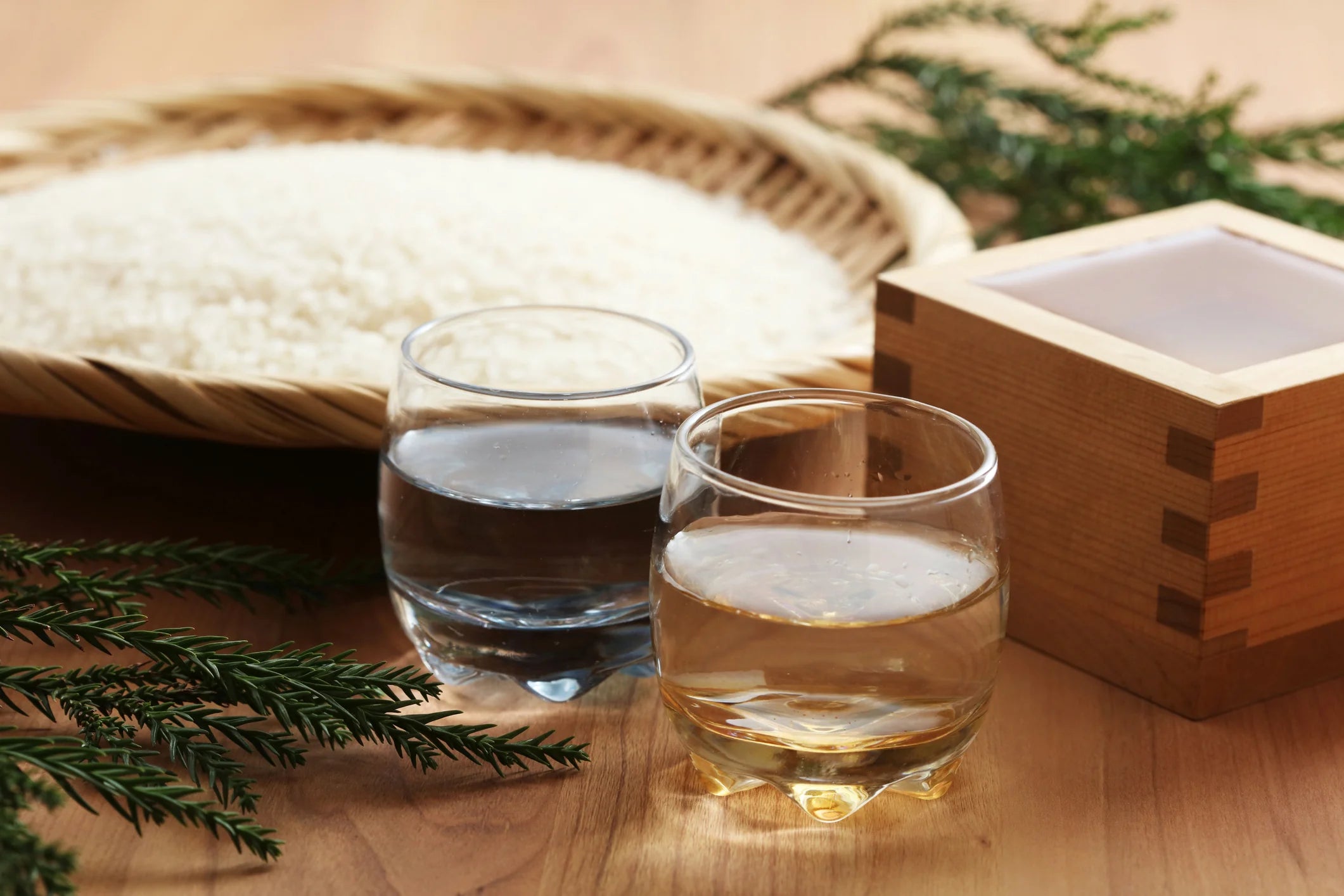
Picture yourself in front of the sake shelf. Perhaps in a Japanese grocery in Amsterdam, perhaps in the sake corner of a good wine shop.
What are you actually looking at?
If you are like most people, two things: the price, and whether the label looks beautiful. Which is a perfectly reasonable way to buy a bottle. It is also, more or less, guessing.
Someone who knows sake is looking at the same shelf and seeing something quite different. Not because they have memorised hundreds of brewery names, but because they are reading each bottle backwards — from the liquid, to the decisions that made it, to the four ingredients that nearly every sake in the world shares.
Once you have those four in your head, and some sense of what a brewer can do with them, the shelf starts to make sense.

Rice has no sugar in it
This is the fact everything else rests on, and it catches most wine drinkers by surprise.
Grapes turn up at the winery already sweet. Crush them, add yeast, and fermentation is underway by the afternoon. Rice offers nothing of the sort. There is no sugar in a grain of rice — only starch, and yeast cannot eat starch.
So sake needs something to turn the starch into sugar first.
That something is kōji: steamed rice with a mould grown on it. As the mould grows, it produces enzymes, and those enzymes cut the starch into sugar. You may have seen the word on a bottle.
Which sounds like a technicality until you notice what it does. In sake, the enzymes release sugar and the yeast eats it almost as fast as it appears, so sugar never accumulates. Yeast usually shuts down when the alcohol around it gets too high, but sugar arriving in a slow trickle keeps it working far longer than it would in wine. Sake climbs to around 20% before the brewer decides to stop it. Most is then diluted back to somewhere near 15%, which is where you find it in the bottle.
The four ingredients
Rice
It comes off the field brown, and the outer layers are polished away before brewing. How much comes off is one of the brewer's largest decisions. Those outer layers hold proteins and fats, which turn into savoury weight and a grainy character. The centre of the grain is nearly pure starch. Polish a little, and the sake keeps its savoury side. Polish away half the grain, and what remains gives something cleaner and more fragrant.
Water
Roughly eighty per cent of what is in the bottle, so hardly a background detail. Japanese brewing water is unusually soft — low in the calcium and magnesium that most European water carries. Harder water ferments faster and pushes towards something drier and firmer. Breweries were historically built where the water was, and many still name their source on the label.
Yeast
Different strains smell like different things. Some produce banana and melon so vividly that you would swear someone had added fruit. Others stay quiet and let the rice do the talking. Aroma is not all of it either — yeast also shapes how much acidity ends up in the glass. Most breweries work with strains from a shared national collection, chosen deliberately for the sake they want. Some use yeast isolated from flowers, or borrowed from wine. A few work with whatever lives in the walls of their own brewery, though that is rare.
Kōji
Its enzymes make the sugar, and they also break the rice proteins down into the compounds behind sake's savouriness. How the mould is grown is a decision in itself, and it changes the sake that results.

Reading one bottle
Reading one bottle
A bottle says: Yamada Nishiki, polished to forty per cent, junmai daiginjō.
Sixty per cent of the grain gone means the savoury, grainy side has largely stepped out of the picture; junmai means no distilled alcohol was added. So: aromatic rather than earthy, and whatever weight it has comes from the rice itself — less lifted than it would be with alcohol added.
What the label does not say is which yeast, how cold the tank ran, how the kōji was grown, and a good deal more. Those decisions were made, and they shape the style. But you are already a long way from guessing at everything.
Which is the honest version of what reading a bottle gets you. Not the answer. A narrowed set of expectations, and the pleasure of finding out whether you were right.


What sake does not have
Three absences, and each one changes what sake does next to food.
No tannin. Tannin is what gives red wine that dry, mouth-drying grip, rather like strong black tea. Polished rice has none of it. Whatever structure a sake has comes from texture and umami instead.
Lower acid. Acidity is a wine's blade. Sake is only delicately acidic, so it does not cut through a dish in the way a Chablis cuts through butter.
No vintage in the way you are used to. What a sake label carries is a production date, and in practice that usually means the date it was bottled — not the year the rice was grown. Most sake is made to be drunk young, and most breweries are trying to reproduce a house style rather than to capture one particular season.
Those absences are also the reason sake is so easy to put on a table. Wine brings acid and, in reds, bitter tannin. Beer brings bitterness from hops. Spirits bring alcohol, often over 40%. Each of those can collide with a dish. Sake arrives with almost none of them, which is why it will sit beside egg yolk, or roe, or something deeply savoury, and not argue. Salt, in particular, makes sake taste better.
Tasted on its own, an excellent sake can seem to be doing very little. Put a plate next to it and the quiet turns out to have been range.
📍 In your glass
📍 In your glass
Stand in front of that shelf again. Most of the label is still unreadable, and you have not memorised a single brewery — plenty of what decided the taste of each bottle is not printed there and never will be. But you now know what the brewer had to work with, and roughly what they could have done with it. A bottle is no longer a closed box.
So buy one: a junmai, not a ginjō.
Pour a small glass straight from the fridge, and leave a second glass out on the counter for twenty minutes. Then put something on the table — a piece of cheese, nothing too strong. A young Gouda or a mild cheddar.
Taste the cold glass on its own, then with the cheese. Then the warmer glass, on its own and with the cheese. The cold one will be tighter and more restrained; the warmer one fuller, more intense, and you will notice the acidity more.
Nothing about the sake changed. Only the temperature, and what you ate with it.
Cheese, incidentally, is one of the foods people worry about with wine. Sake tends not to mind.

The next step
Everything here is easier to hold onto once you have tasted it side by side. That is really all a course is for.
WSET Sake Course
Level 1 Award in Sake is a single day in Amsterdam: six hours, a guided tasting through the main styles, and an internationally recognised certificate at the end.
Level 2 goes considerably further into how each of these decisions shapes what ends up in the glass.